

Natural sounds reassuring.
Synthetic can sound artificial.
And when you are choosing a perfume, it is easy to assume that one must be better than the other.
But fragrance is rarely that simple.
A beautiful perfume can contain natural ingredients.
It can contain synthetic ingredients.
And very often, it contains both.
What matters is not whether an ingredient came from a flower, a field or a laboratory.
What matters is what it contributes to the composition.
How it smells.
How it works with the other materials.
And ultimately:
how the finished fragrance makes you feel when you wear it.
So what is the real difference between natural and synthetic perfume ingredients?
And what should you actually care about when choosing a fragrance?
What Are Natural Perfume Ingredients?
Natural perfume materials come from naturally occurring raw materials, most often botanical sources.
They may be obtained through processes such as distillation, expression or extraction.
Examples include materials derived from:
- citrus peel
- flowers
- woods
- roots
- leaves
- resins
- spices
A natural extract is usually complex.
It may contain many different aromatic molecules, which is why a single material can reveal several facets at once.
A rose can feel fresh, green, honeyed, spicy or velvety.
Vetiver can feel earthy, smoky, woody or surprisingly fresh.
Vanilla can feel creamy, floral, warm or dry.
This complexity is one of the reasons natural materials remain so fascinating to perfumers.
But natural does not automatically mean better.
It simply means the material has a natural origin.
What Are Synthetic Perfume Ingredients?
Synthetic fragrance materials are created through chemical processes rather than being directly extracted from a natural raw material.
Some are inspired by molecules found in nature.
Others allow perfumers to create smells, textures or sensations that cannot easily be obtained through traditional extraction.
They can bring:
- clarity
- diffusion
- softness
- freshness
- warmth
- texture
- structure
They can also help create olfactive effects that do not correspond to one literal ingredient.
Think of:
clean skin
mineral air
transparent woods
soft musks
sea spray
linen
Modern perfumery would be dramatically more limited without them.
Natural Does Not Mean Better. Synthetic Does Not Mean Worse.
This is the most important point.
Origin is not a quality score.
A natural material can be beautiful.
A synthetic material can be beautiful.
Either can also be used poorly.
The skill lies in the composition.
The perfumer decides:
- which materials belong together
- how they should contrast
- how they should evolve
- what emotion the finished perfume should create
That is why judging a fragrance by one percentage or one ingredient category can be misleading.
A perfume is not simply the sum of its raw materials.
It is the relationship between them.
What Natural Ingredients Can Bring to a Perfume

Natural materials can bring extraordinary nuance.
Because a botanical extract may contain many aromatic components, it can create richness and texture within a formula.
That does not mean every natural ingredient is complex in the same way.
And it does not mean complexity automatically makes a fragrance better.
But it gives the perfumer one type of palette.
Natural materials may also vary subtly depending on factors such as origin, harvest and processing.
For the perfumer, that is part of working with agricultural raw materials.
They are not simply “better ingredients.”
They are creative materials with their own character.
 What Synthetic Ingredients Make Possible
Synthetic materials expanded what perfumers could create.
Some smells simply cannot be obtained by extracting the original source in a useful form.
Lily of the valley is a classic example.
The flower has a recognizable scent, but perfumers cannot simply distil it into a traditional essential oil and reproduce that exact smell.
Instead, the impression must be constructed using fragrance materials.
This is where perfumery becomes more than reproduction.
The perfumer is not simply bottling nature.
They are interpreting it.
And sometimes inventing something that never existed in nature at all.
Does Synthetic Mean Cheap Perfume?
No.
“Synthetic” describes how a material originates.
It does not tell you whether it is luxurious.
It does not tell you whether it is inexpensive.
And it does not tell you whether it belongs in a beautiful perfume.
The same applies to natural ingredients.
Some botanical materials are widely available.
Others are more difficult to produce.
Some synthetic materials are relatively simple.
Others are the result of sophisticated fragrance research.
So when someone says:
“This perfume is expensive, therefore it should contain only natural ingredients.”
the assumption is flawed.
Luxury cannot be measured by counting naturals.
Natural Does Not Mean Chemical-Free
Everything has chemistry.
A lemon contains chemicals.
A rose contains chemicals.
Your skin contains chemicals.
The scent of jasmine exists because of chemical compounds.
So “natural” and “chemical” are not opposites.
When people say:
“I don't want chemicals in perfume,”
they often mean something more specific.
Perhaps they want transparency.
Perhaps they have an allergy.
Perhaps they prefer certain ingredients.
Perhaps they want to avoid particular substances.
Those are valid questions.
But the useful question is not:
natural or chemical?
It is:
what is the ingredient, and how is it used?
Are Natural Ingredients Safer?
Not automatically.
Natural materials can contain substances that some people are sensitive to.
Synthetic materials can also have their own safety considerations.
A material's origin alone does not tell you whether it will be suitable for every person.
This is why it is misleading to say:
natural = gentle
or:
synthetic = harsh
Safety depends on the specific material, the amount used and the finished formula.
If you already know that you react to certain fragrance ingredients, the ingredient information on the product matters far more than whether the perfume is marketed as “natural.”
Does Natural Perfume Last Less Than Synthetic Perfume?
Not necessarily.
This is another common simplification.
Some fragrance materials evaporate quickly.
Others remain perceptible much longer.
That is true within natural materials.
And within synthetic materials.
Longevity depends on the complete formula.
Projection depends on the complete formula.
Sillage depends on the complete formula.
Concentration may influence how a perfume behaves, but even concentration cannot predict performance by itself.
If you want to understand that distinction in more detail, read Perfume Concentration Explained: EDP, EDT and More.
Are Synthetic Ingredients More Sustainable?
Sometimes they can offer advantages.
Sometimes a natural material may be the better option.
There is no universal rule.
Natural materials may require:
land
water
agriculture
transport
processing
Synthetic materials also require:
raw materials
energy
manufacturing
processing
So sustainability cannot honestly be reduced to:
natural = sustainable
or:
synthetic = sustainable
The impact has to be considered material by material.
Vegan Does Not Mean Natural
These terms are often confused.
They describe completely different things.
Vegan refers to whether animal-derived ingredients are used.
Natural refers to the origin of the material.
A perfume can therefore be:
- vegan and mostly natural
- vegan and contain synthetic ingredients
- vegan and contain both
Synthetic fragrance materials can also make it possible to create musky, animalic or skin-like impressions without relying on traditional animal-derived materials.
At Les Soeurs de Noé, our fragrances are vegan and cruelty-free.
That does not mean we reject modern fragrance chemistry.
So Why Do Perfumers Use Both?
Because they do different things.
Imagine a painter limited to only half of their colours.
That is what perfumery would look like if perfumers were forced to choose one category exclusively.
A natural material might bring texture.
A synthetic molecule might bring transparency.
Another ingredient might add brightness.
Another might create contrast.
Another might provide a sensation that does not exist in nature at all.
The art is not in choosing sides.
It is in making everything work together.
You should not smell a perfume and think about the construction.
You should experience the fragrance.
How Les Soeurs de Noé Approaches Ingredients
At Les Soeurs de Noé, our fragrances are made in France in collaboration with perfumer Jérôme Epinette.
Our compositions contain more than 85% ingredients of natural origin and are vegan and cruelty-free.
But we do not believe that percentage alone should decide whether you love a fragrance.
Modern fragrance materials are part of the perfumer's palette too.
The objective is not to win a competition between nature and science.
It is to create a perfume with:
character
emotion
balance
identity
The finished fragrance comes first.
Should You Choose a Perfume Based on Its Ingredients?
Ingredient information matters.
Especially if you have:
- a known sensitivity
- a specific ethical requirement
- a personal ingredient preference
But ingredients do not tell the whole story.
A note list cannot tell you exactly how a perfume will feel.
A percentage cannot tell you whether you will love wearing it.
A beautiful ingredient cannot guarantee a beautiful perfume.
That is why the final test is much simpler:
Do you want to wear it again?
What Matters More Than “Natural vs Synthetic”?
When choosing perfume, ask:
Do I love the opening?
Do I enjoy what it becomes?
Does the fragrance feel right on me?
Do I want to smell it again tomorrow?
Those questions are far more useful than trying to judge quality from ingredient origin alone.
If you want to understand why the same fragrance can feel different once worn, read Why Does the Same Perfume Smell Different on Everyone?.

Experience the Perfume Before You Judge the Formula
A formula can sound impressive.
A percentage can sound luxurious.
An ingredient list can sound sophisticated.
But perfume exists to be smelled.
And worn.
That is why discovery is more valuable than theory when you are deciding whether a fragrance belongs in your life.
At Les Soeurs de Noé, there are two ways to begin.
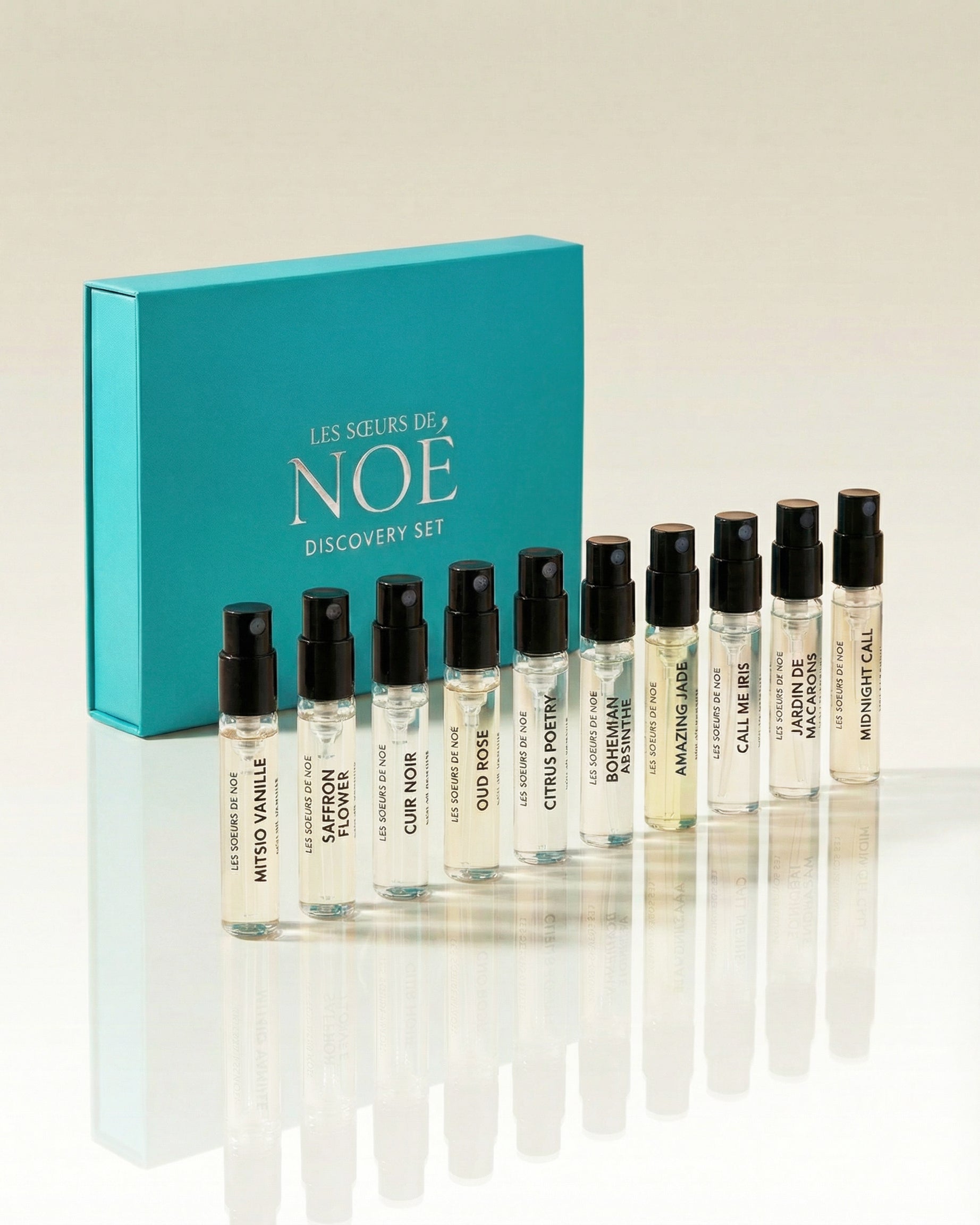
Discovery Set
10 × 2 ml - €55
Discover ten fragrances from the Signature Collection and compare different olfactive styles at home.
The Discovery Set includes a €50 voucher toward an eligible order over €150.
Sample Box
8 × 2 ml - €50
Prefer to choose the fragrances yourself?
Create your own selection of eight samples and explore the compositions that interest you most.
The Sample Box also includes a €50 voucher toward an eligible order over €150.
Then wear them.
Compare them.
Notice what surprises you.
Notice which fragrance you keep returning to.
For a complete method, read How to Test Perfume Like an Expert.
The Best Perfume Is Not the Most Natural One
And it is not the most synthetic one either.
The best perfume for you is the one whose composition works as a whole.
The one that creates something you want to experience again.
Nature gives perfumers an extraordinary palette.
Modern fragrance chemistry expands that palette.
The perfumer brings them together.
And you make the final decision when you wear the fragrance.
So instead of asking:
“Is this perfume natural or synthetic?”
try asking:
“Do I love what they created?”
That is the question that matters.
Frequently Asked Questions
Are natural perfume ingredients better than synthetic ingredients?
No. Neither category is inherently better. Natural and synthetic materials offer different olfactive possibilities, and the quality of a perfume depends on the finished composition rather than ingredient origin alone.
Are synthetic perfume ingredients safe?
A material's safety depends on the specific substance, concentration and intended use. Synthetic does not automatically mean unsafe, just as natural does not automatically mean safe.
Are natural perfumes better for sensitive skin?
Not necessarily. Naturally occurring materials can also contain substances that some people react to. If you have known sensitivities, review the relevant product information rather than relying on “natural” as a safety guarantee.
Does synthetic mean cheap perfume?
No. “Synthetic” describes origin, not quality or price.
Do synthetic ingredients make perfume last longer?
Not automatically. Longevity depends on the complete composition and the volatility of all the materials used.
Why do perfumers use synthetic ingredients?
They expand the creative palette, allow perfumers to create certain smells that cannot easily be extracted from nature and help build effects such as musks, transparent woods or atmospheric impressions.
Can perfume contain both natural and synthetic ingredients?
Yes. Many modern fragrances combine both.
Is vegan perfume the same as natural perfume?
No. Vegan relates to animal-derived ingredients. Natural relates to ingredient origin.
Are synthetic ingredients more sustainable?
Not automatically. Sustainability depends on the individual material, how it is sourced or manufactured and the resources required.
What should I look for when choosing perfume?
Consider ingredient information when it matters to your health, values or personal preferences. For the fragrance itself, testing it on your skin remains one of the best ways to decide whether you genuinely enjoy wearing it.


Leave a comment
This site is protected by hCaptcha and the hCaptcha Privacy Policy and Terms of Service apply.