

You smell a perfume on someone and immediately want to know what they are wearing.
You try the same fragrance on yourself.
And somehow, it doesn't feel quite the same.
Maybe it seems warmer.
Softer.
Sharper.
Less noticeable.
Or simply different from the scent that made you turn your head in the first place.
So what happened?
The perfume has not suddenly become a different formula. But the way fragrance is released, experienced and perceived can vary from one person to another.
Skin can play a role.
So can temperature and environment.
And there is another factor that is often forgotten entirely:
your nose.
Here is what actually matters.
Does Perfume Really Smell Different on Everyone?
It can.
But the explanation is more nuanced than the familiar phrase:
“It's your skin chemistry.”
A perfume is made from the same composition whether you spray it on yourself or someone else.
Your skin does not magically rewrite the formula.
What can change is how individual fragrance molecules evaporate from the surface, how quickly different parts of the composition become perceptible and how your own nose interprets what reaches it.
Think of the experience as three layers:
the perfume
the surface and environment
the person smelling it
All three influence what you experience.

Your Skin Can Change How Fragrance Is Released
Once perfume leaves the bottle, its aromatic molecules begin evaporating into the air.
That is how you smell them.
Skin is not an inert surface.
Its hydration, barrier properties, texture and temperature can influence how different molecules are retained and released.
Recent research comparing fragrance evaporation across different people found measurable differences between individuals and suggested that skin hydration and other surface characteristics can influence the evaporation of particular fragrance materials.
That does not mean every perfume transforms dramatically on every person.
It means the balance you perceive at a given moment can shift.
One material may remain perceptible slightly longer.
Another may disappear faster.
And the composition can consequently feel different.
Does Skin pH Change the Smell of Perfume?
This is one of the most repeated explanations in fragrance advice.
It is also often oversimplified.
You will frequently read statements such as:
“Acidic skin makes perfume sour.”
or:
“Your pH completely changes the notes.”
There is not enough evidence to treat those claims as universal rules.
Skin pH is one characteristic of the skin surface, but current research suggests that fragrance evaporation is influenced by multiple interacting factors rather than one simple pH number.
So if a perfume smells different on you than on your friend, do not immediately assume your skin is too acidic, too alkaline or somehow incompatible with fragrance.
The answer is rarely that simple.
Hydration May Matter More Than You Think
One factor worth paying attention to is skin hydration.
Fragrance molecules can evaporate differently depending on the surface they are applied to, and recent research suggests hydration may influence the release of certain fragrance materials.
This can help explain why the same fragrance sometimes seems to disappear faster from one person's skin than another's.
But even here, avoid rigid rules.
It would be too simplistic to say:
dry skin = perfume disappears
oily skin = perfume lasts
Different molecules behave differently.
The complete formula matters.
Your environment matters.
And what you perceive matters.
If you find fragrance tends to disappear quickly on you, trying it on clean, comfortably moisturized skin can be useful.
It is a practical experiment, not a guarantee.
Temperature Changes the Way Fragrance Evaporates
Perfume relies on evaporation.
Temperature therefore matters.
When the skin or surrounding environment is warmer, volatile fragrance molecules can move into the air differently than they do in cooler conditions.
That is one reason the same perfume may seem different during a warm summer afternoon and a cold winter morning.
Air movement can matter too.
Your fragrance exists in the air around you, not only on your wrist.
So what you perceive in a warm room, outdoors or in moving air may not be identical.
This is also why judging a perfume under one single set of conditions can be misleading.
Your Nose Is Part of the Equation Too
This may be the most overlooked reason of all.
Two people can smell the same aromatic material and perceive it differently.
Human beings have hundreds of olfactory receptors, and genetic variation in those receptors can influence sensitivity to particular odorants.
For certain molecules, one person may perceive a smell as strong while another experiences it more faintly.
A material may even seem more pleasant to one person than another.
So when you say:
“This smells different on you.”
sometimes part of the difference may not be occurring on the skin at all.
It may be happening in the nose and brain of the person smelling it.
That is one reason fragrance remains intensely personal.

Why Does Perfume Smell Different on Paper and Skin?
A blotter is useful.
It lets you experience a fragrance without another scented product on your skin and makes comparing several perfumes easier.
But paper and skin are different surfaces.
Skin has warmth, moisture, texture and a living barrier.
Paper does not.
The rate at which fragrance materials leave those surfaces can therefore differ.
This does not mean that blotters “lie.”
They simply answer a different question.
A blotter can tell you:
Am I interested in this fragrance?
Skin helps answer:
Do I enjoy wearing it?
For the final decision, the second question matters more.
Why the Opening Is Not the Whole Perfume
When you first spray a fragrance, some of its more volatile materials reach your nose quickly.
As time passes, the balance changes.
Other facets become more noticeable while some of the opening fades.
This is often described through top, heart and base notes.
The reality of evaporation is more complex than three perfectly separated stages, but the concept remains useful:
a fragrance develops.
That is why buying a perfume based entirely on the first few minutes can lead to disappointment.
You are choosing the opening without yet knowing whether you enjoy what comes afterwards.
Instead of following an arbitrary “20-minute rule” or waiting exactly four hours, simply give the fragrance enough time to experience more than its first impression.
Then come back to it.
Why the Same Perfume Can Smell Different on You on Different Days
Even your own experience of one perfume is not always identical.
The environment may be warmer or colder.
Your skin may be more or less hydrated.
You may have used a different body product.
You may already have been exposed to other fragrances.
And your nose can adapt to a smell after prolonged exposure.
That last point is particularly important.
Sometimes you think your perfume has disappeared.
Someone beside you can still smell it.
Your own sensory system may simply have become less responsive to a fragrance that has remained around you for some time.
So:
“I can't smell it anymore” does not necessarily mean “the perfume is gone.”
Does This Mean You Should Never Blind Buy Perfume?
Not necessarily.
But it explains why a fragrance can sound perfect online and still surprise you once you wear it.
The note list can tell you what materials or impressions are part of the composition.
The fragrance family can give you a sense of direction.
Reviews can tell you what other people experienced.
None of those things can completely recreate your experience of wearing it.
That is why sampling is particularly valuable when:
you are unfamiliar with the house,
you are choosing between several fragrances,
you are making a significant full-bottle purchase,
or you simply want to know how the perfume feels in your own life.
If you are shopping remotely, our guide to How to Buy Perfume Online Without Regret explains how to narrow the possibilities before you sample.
How to Test Whether a Perfume Works for You
Keep the process simple.
Start on paper if you are comparing several fragrances.
Choose the ones you genuinely want to explore further.
Then wear them on skin.
Try not to cover the test area with another strongly scented product first.
Experience the opening.
Then stop analysing it for a while.
Go about your day.
Notice the fragrance when you naturally encounter it again.
Ask yourself:
Do I enjoy what it becomes?
Does its presence feel comfortable?
Do I want to smell it again?
Then wear it on another day.
That second wear is often surprisingly useful.
For a complete method, read How to Test Perfume Like an Expert.
What If a Perfume Smells Better on Someone Else?
This can create one of the biggest fragrance doubts:
“Maybe this perfume just isn't made for my skin.”
Sometimes, you simply prefer how you perceive it on someone else.
That is useful information.
But it does not mean your skin has failed the fragrance.
Ask yourself one thing:
Do I enjoy wearing the version I experience on myself?
You do not need it to reproduce someone else's scent trail exactly.
You only need to enjoy the way the fragrance exists in your own life.
And if you don't?
Choose something else.
There is no reason to convince yourself to love a perfume because it smells wonderful on another person.
Don't Choose a Perfume for Someone Else's Skin
This is also why copying someone else's signature scent can be unpredictable.
You may love the perfume they wear.
But perhaps what you really love is:
the fragrance,
the way they wear it,
the way you perceive it on them,
or even the association you now have with that person.
Try it yourself before deciding.
The goal is not to recreate their experience.
It is to discover yours.
If you are still looking for the fragrance you naturally want to return to, read How to Find Your Signature Scent: A 5-Step Guide.

The Safest Way to Know: Sample It on Your Own Skin
You cannot control every variable involved in fragrance.
And you do not need to.
You simply need enough time with a perfume to answer the question that matters:
Do I love wearing this?
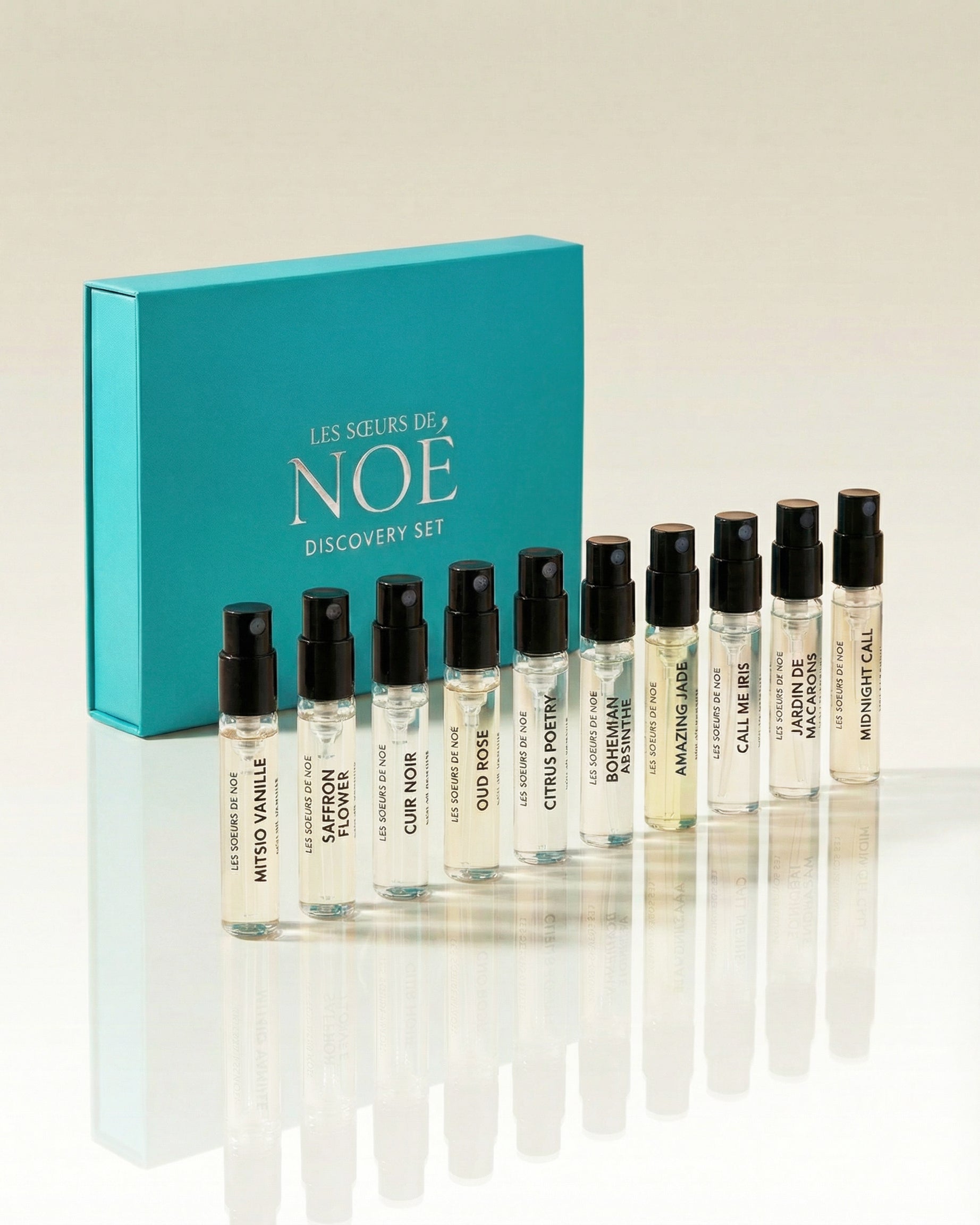
At Les Soeurs de Noé, you can explore fragrance at home in two ways.
Discovery Set
10 × 2 ml - €55
Explore ten creations from the Signature Collection and experience them on your own skin before choosing a full-size fragrance.
The Discovery Set includes a €50 voucher valid on an order of €150 or more.
Sample Box
8 × 2 ml - €50
Already curious about particular fragrances?
Create your own selection of eight samples and compare them in your everyday environment.
The Sample Box also includes a €50 voucher valid on an order of €150 or more.
Both options allow you to move from:
“I think I'll like this.”
to:
“I know I want to wear this.”
The vouchers are valid for 30 days from issue, single-use and subject to their terms and conditions.
Your Skin Is Part of the Experience, Not a Verdict
The fact that perfume can feel different from one person to another is not something to fear.
It is one of the reasons fragrance is personal.
Skin can influence how individual materials are released.
Temperature and environment can influence evaporation.
Your sense of smell influences what you perceive.
And the composition itself is constantly changing in balance as different molecules evaporate.
So the next time a fragrance smells extraordinary on someone else, don't ask:
“Will it smell exactly the same on me?”
Ask:
“What will I discover when I wear it myself?”
That is the experience that matters.
Frequently Asked Questions
Why does perfume smell different on me than on someone else?
Differences can arise from several factors, including how fragrance molecules evaporate from the skin, skin hydration and other surface properties, environmental conditions and individual differences in smell perception. There is no single “skin chemistry” factor that explains every difference.
Does skin pH change perfume?
Skin pH may be one of many characteristics of the skin surface, but it should not be treated as a universal explanation for why perfume smells different. Current research suggests fragrance evaporation is influenced by several interacting factors.
Does dry skin make perfume disappear faster?
Skin hydration may influence the evaporation of some fragrance molecules, but there is no simple rule that predicts the performance of every perfume. The formula, environment and individual fragrance materials also matter.
Does perfume smell different on paper than on skin?
It can. Paper and skin have different surface properties, so fragrance materials may evaporate differently. Blotters are useful for initial comparison, while skin testing gives you a better idea of the wearing experience.
Can two people genuinely perceive the same perfume differently?
Yes. People vary in sensitivity to particular odorants, and genetic variation in olfactory receptors can influence the perceived intensity or pleasantness of certain smells.
Can the same perfume smell different on me from one day to another?
Your experience can vary with factors such as temperature, skin condition, other scented products and sensory adaptation. Small differences from one wear to another are therefore possible.
Is perfume stronger on warm skin?
Temperature influences evaporation, but “warmer skin = better perfume” is too simplistic. Different molecules respond differently, and the full composition matters.
Should I test perfume on my skin before buying?
Whenever possible, yes. A blotter is useful for the first impression, but wearing the fragrance lets you experience its development and decide whether you genuinely enjoy it.
How many times should I wear a sample before buying a bottle?
There is no mandatory number. Wearing a perfume more than once can help you avoid making a decision based only on one setting or one first impression.
What if I love a perfume on someone else but not on myself?
Choose according to your own wearing experience. A fragrance can be beautiful on another person without being the fragrance you personally want to wear.


Laisser un commentaire
Ce site est protégé par hCaptcha, et la Politique de confidentialité et les Conditions de service de hCaptcha s’appliquent.